

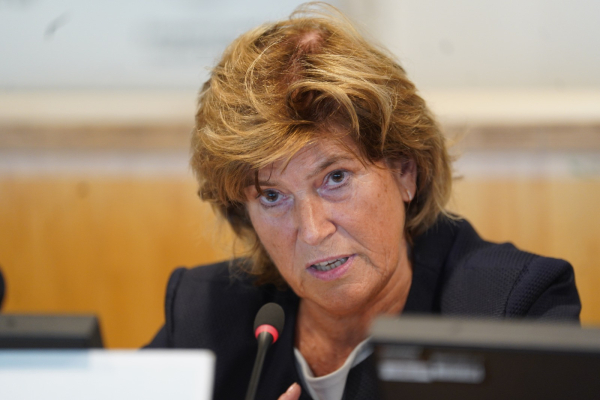
ENVE members have today endorsed the first ever opinion on small modular nuclear reactors at the Committee of the Regions led by ECR member Ans Mol, who urged to keep nuclear at the “heart of Europe’s energy future”—strengthening security, lowering dependencies and defending industrial competitiveness.
The political message of this draft opinion was clear: Europe cannot deliver affordable energy, strategic autonomy and a competitive industrial base by excluding nuclear power or subordinating every low-carbon option to renewables.
“Decisions taken in this decade will shape Europe’s energy system for decades to come, and postponing choices today will limit our options tomorrow,” Mol said. “Europe’s energy transition will not be served by closing off options before they have been properly assessed.”
SMRs can provide reliable low-carbon electricity and heat, reinforce grid stability and serve industrial clusters, hydrogen production, district heating and data infrastructure. Mol argued that regions must be partners from day one. Planning, transport, civil protection, workforce skills and public trust are territorial questions, but costs and risks cannot simply be transferred downwards. “Local authorities cannot be expected to carry financial or administrative burdens arising from decisions taken elsewhere,” Mol said.
The rapporteur who also serves as regional minister of the province of Gelderland in the Netherlands also acknowledged that safety, economic viability, deployment and sustainable radioactive-waste management must be addressed rigorously and transparently. But for Mol, “unresolved questions are a reason to prepare responsibly—not an excuse to close the door on nuclear innovation”.
The rapporteur advocated a Europe-wide programme of first-of-a-kind projects. Shared investment, faster licensing and greater standardisation would cut costs, develop expertise and strengthen European supply chains before global competitors gain the upper hand in technology and export markets. “Our objective should not be a collection of isolated demonstration projects, but a genuinely European effort that allows us to learn together, invest together and assess together,” Mol said.
The opinion is scheduled for final adoption at the European Committee of the Regions’ plenary session on 2–3 December 2026.