

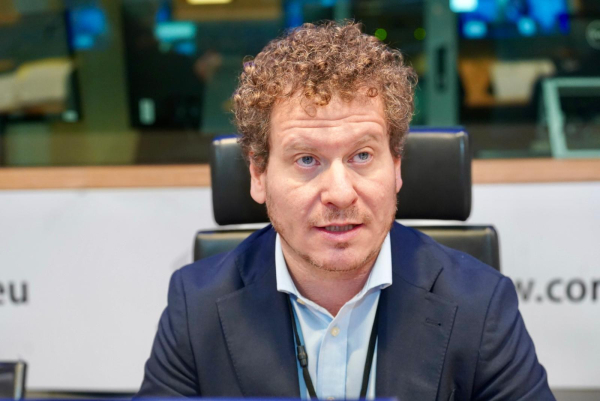
ECR rapporteur Matteo Bianchi brought local and regional experience to the centre of the EU simplification debate during a stakeholder consultation on his opinion, “A Simpler, Clearer and Better Enforced EU Rulebook”.
Ahead of the consultation, Bianchi held meetings with relevant institutional stakeholders, including a member of Executive Vice-President Valdis Dombrovskis’ Cabinet, rapporteurs of the European Parliament and officials representing the EU Council Presidency. The exchanges helped shape the opinion’s priorities and gather input on how EU rules can become simpler, clearer and easier to apply in practice.
The consultation brought together regional representatives and other stakeholders to provide practical evidence for the draft opinion before it advances to the CIVEX Commission and subsequently to the Committee of the Regions plenary.
Bianchi stressed that better regulations must avoid unnecessary complexity, reduce administrative burdens and keep EU action focused on areas where it brings real added value. At the same time, simplification must remain firmly anchored in subsidiarity and respect Europe’s different administrative and territorial realities. “Too often, we discuss better regulation only from the perspective of Brussels. Yet European rules are ultimately implemented in our regions, cities and municipalities, by public administrations, businesses and people on the ground,” he said.
The consultation focused on the experience of those who apply European legislation in practice. “If a new procedure, reporting requirement or monitoring obligation simply creates more work for municipalities, regions and smaller administrations, we have not reduced the burden. We have only moved it downwards,” he warned.
The rapporteur also called for a stronger two-way process in EU policymaking, with rules moving from Brussels to the territories and practical experience flowing back to national capitals and the European institutions. He highlighted RegHub as a valuable instrument for gathering evidence directly from authorities implementing EU law, “this can help us understand whether legislation works, whether it creates disproportionate costs and whether its impact differs between urban, rural, mountain, island, border or remote regions.”