

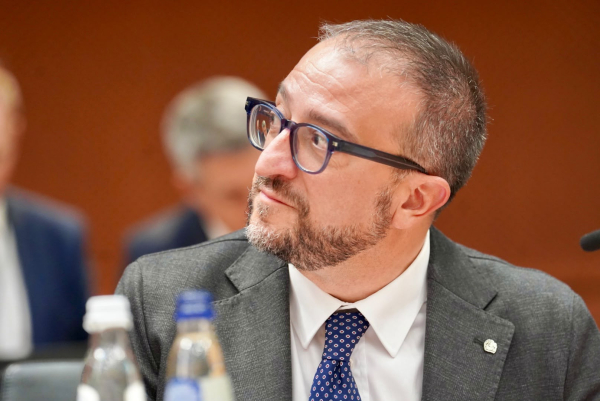
Recently appointed European Committee of the Regions rapporteur on the future of the European Capitals of Culture, ECR member and Mayor of L’Aquila Pierluigi Biondi has set out a clear ambition: to make culture a lasting instrument of regeneration, development and cohesion for cities and regions across Europe.
Speaking during the plenary exchange with European Commissioner Glenn Micallef on the European Capitals of Culture, Mr Biondi congratulated Liepāja and Évora on becoming the 2027 titleholders. He stressed that his new rapporteurship will focus on the initiative’s future and long-term legacy, ensuring that it continues to transform territories, reinforce local identity and create opportunities well beyond the year of celebrations.
“The European Capitals of Culture show how culture can transform territories, strengthen communities and create new opportunities,” he said. “As Mayor of L’Aquila, the Italian Capital of Culture 2026, I know that culture is much more than a programme of events. It is regeneration, development and cohesion.”
The experience of L’Aquila gives this message particular significance. Following the 2009 earthquake, the city learned that reconstruction cannot be limited to physical infrastructure. It must also restore a community’s identity, sense of belonging and confidence in the future.
As rapporteur, Biondi will bring the voice of local and regional authorities into the debate on the European Capitals of Culture after 2033. His work will examine how the initiative can deliver a durable cultural, social and economic legacy, involve surrounding territories and remain accessible to medium-sized cities and communities outside Europe’s largest metropolitan centres.
“European identity is not created by erasing our differences,” Biondi concluded. “It is created by recognising the richness of our cities, regions and histories”