

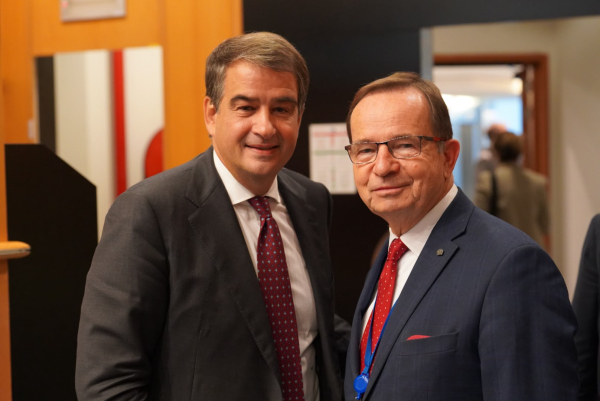
The future of cohesion policy and the next Multiannual Financial Framework were at the centre of discussions during the joint meeting of the European Parliament's REGI Committee and the Committee of the Regions' COTER Commission at the presence of the Executive Vice-President of the European Commission Raffaele Fitto. Representing the ECR Group as COTER coordinator, ECR First Vice-President and President of the Podkarpackie Region Władysław Ortyl stressed that regions must remain at the centre of Europe's investment priorities.
Welcoming Executive Vice-President Raffaele Fitto, Ortyl praised his commitment to Europe’s regions and to close cooperation with the Committee of the Regions. He acknowledged the need to make the EU budget simpler, more agile and more flexible, while increasing investment in security and defence, competitiveness and the protection of Europe’s external borders.
However, he warned that these priorities must not come at the expense of cohesion policy or the Common Agricultural Policy. “Our message throughout the negotiations has been clear: these Treaty-based policies must remain at the core of the EU budget and must not face further cuts,” Ortyl said.
He highlighted as a positive signal that the Irish Presidency’s negotiating box protects the funding for the National and Regional Partnership Plans, as well as the possibility for regional authorities to negotiate directly with the European Commission and the need for the plans to safeguard the role of regions. Ortyl described these as important steps forward and a result of the joint work carried out by the European Parliament and the Committee of the Regions.
“We must now ensure that the final agreement gives regions a strong role in shaping and delivering investment,” he said.
Looking ahead, Ortyl stressed that a robust cohesion policy will also be essential for the EU’s forthcoming Right to Stay Strategy. Citizens should remain free to leave their home regions to study, work or pursue new opportunities, but they should never be forced to leave because their territories have fallen behind.
“Thriving regions are built on dynamic local economies, job opportunities, strong infrastructure and reliable public services,” he said. “Without economic vitality, demographic decline becomes almost impossible to reverse.”
The Right to Stay Strategy should therefore ensure that Europe’s competitiveness initiatives, including the Competitiveness Fund, benefit every region rather than concentrating investment in a limited number of metropolitan centres. It should also create synergies with initiatives addressing the needs of specific territories, particularly the EU’s eastern border regions.
“If we want investment to flow into less-developed territories, we must make it easier to create, grow and sustain businesses there,” Ortyl concluded. “For that, we need a strong cohesion policy with regions firmly at its centre.”