

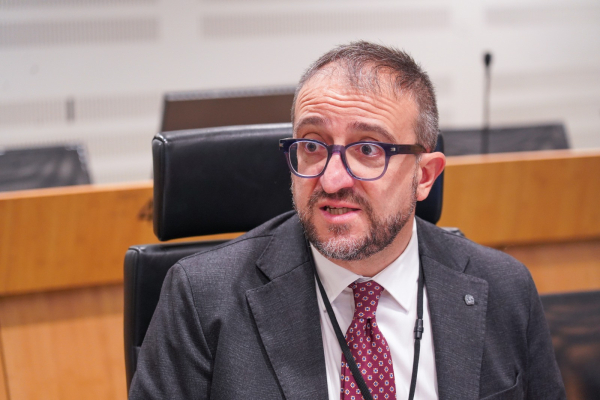
ECR rapporteur Pierluigi Biondi, Mayor of L’Aquila, held a stakeholder consultation on the future of the European Capitals of Culture initiative, putting local identity, long-term legacy and opportunities for young people at the heart of his work on the opinion. The consultation contributed to his work as rapporteur on the European Commission proposal to renew the initiative for 2034-2047.
Drawing on his experience as Mayor of L’Aquila, Italian Capital of Culture 2026, Pierluigi Biondi stressed that culture had played a central role in his city's recovery after the 2009 earthquake. “After the 2009 earthquake, we understood that culture could not be a chapter of reconstruction to be opened once the other emergencies had been resolved. It has to be the mortar that holds the stones together.”
“A European Capital of Culture should also be rewarded for its ability to make culture a method of governing the territory. The European dimension is not built by setting aside local identities, but by enhancing them", Mr Biondi added.
The rapporteur also placed particular emphasis on what remained once the title year had ended, arguing that the success of a European Capital of Culture should be measured by its lasting impact on communities rather than visitor numbers alone. “The benefits cannot stop at the city centre or at the number of visitors. They must reach neighbouring municipalities, businesses and, above all, young people. For us, this means the right to stay.”
Another priority raised during the consultation was accessibility. Pierluigi Biondi called for a simpler first stage of the selection process so that cities with fewer administrative resources were not discouraged from competing. “This is not about lowering standards but making them proportionate. And no serious strategy should go to waste: cities that do not obtain the title but present a deserving project should be able to count on the support of the Member States and the Union".
The draft opinion is scheduled for discussion and adoption by the SEDEC Commission on 10 December 2026, before going to the European Committee of the Regions plenary for final adoption on 3-4 February 2027.